
In work environments, collaboration and teamwork are terms we hear constantly. They are often treated as interchangeable since most cannot really tell the difference between the two. But while they are closely related, they are not the same.
Truth is, one is not more important than the other. Both collaboration and teamwork play a critical role in how teams function, perform, and grow.
In this article, we’ll break down the differences between collaboration and teamwork, explore where each works best, and show how they come together to create stronger, empowered teams that are ready to take on new challenges.

Key Differences
Collaboration and teamwork often overlap, but they focus on different ways of working.
Collaboration focuses on ideas and thinking.
- Sharing ideas, knowledge, and perspectives
- Solving problems together
- Encouraging creative thinking
- Allowing people to contribute beyond their formal roles
- Exploring different ways to approach a challenge
Collaboration works best when flexibility and creativity matter more than strict structure.
Teamwork focuses on roles and execution.
- Working toward a shared goal
- Clear responsibilities and ownership
- Coordinated effort across roles
- Structure and accountability
- Consistent delivery of results
Teamwork works best when tasks need to be completed efficiently and reliably.
Why The Difference Matters
- Collaboration helps teams discover better solutions
- Teamwork helps teams deliver those solutions
High-performing teams know when to collaborate and when to rely on teamwork—and they switch between the two as needed.
Collaboration: Sharing Ideas Freely
Collaboration is about creating space for ideas to flow freely. It brings together people with different skills, backgrounds, and viewpoints to solve problems or build something new.
In a collaborative environment:
- Ideas matter more than titles
- Input is welcome from different roles
- Questions and experimentation are encouraged
Instead of sticking closely to job descriptions, people are free to contribute where they add value. This often leads to better thinking and better project outcomes.
What Makes Collaboration Effective
- Open communication
- Psychological safety (people feel safe sharing ideas)
- Respect for different opinions
- Tools that support idea sharing and feedback
Collaboration improves team dynamics by helping people feel heard and involved. When individuals see their ideas taken seriously, they become more engaged and motivated.
However, collaboration works best when it’s supported by basic structure. Without alignment or clear goals, it can become unfocused or inefficient.
Read More: The Dynamics of Dev Team Collaboration: Autonomy and Alignment
Teamwork: Working Within Clear Roles
Teamwork is about coordination. Each person has a role, and everyone works together to reach a common goal.
A good way to think about teamwork is like an orchestra:
- Each musician has a specific part
- Everyone follows the same rhythm and direction
- Success depends on timing and coordination
Teamwork relies on:
- Clear roles and responsibilities
- Trust between team members
- Strong leadership and guidance
- Consistent communication
Team leaders play an important role in teamwork. They help align priorities, remove blockers, and ensure information flows smoothly across the team.
When teamwork is strong, people know what’s expected of them. This reduces confusion, improves efficiency, and helps teams deliver reliable results.
When Collaboration Matters
Collaboration is most useful when teams need to think creatively or adapt quickly.
It works best in situations like:
- Brainstorming new ideas
- Solving complex or unfamiliar problems
- Exploring different solutions
- Responding to change or uncertainty
For example, in a startup environment, collaboration is essential. Team members often wear multiple hats and contribute beyond their defined roles. Ideas come from everywhere, not just leadership.
Read More: AI-Powered Task Management Software: A Game Changer for Dev Teams
Benefits of Collaboration
- Encourages innovation
- Helps teams adapt faster
- Builds shared ownership of ideas
- Strengthens problem-solving
Challenges to Watch For
- Too many ideas without direction
- Overlapping work
- Lack of decision-making clarity
To avoid these issues, collaboration still needs:
- Clear goals
- Simple decision rules
- Tools that support communication and feedback
When done well, collaboration leads to results that are stronger than what individuals could achieve on their own.
When Teamwork Plays a Big Role
Teamwork is like a well-oiled machine, where everyone has a specific job, and they all work together to get something done. It works best when you break a big task into smaller parts and each person does what they're good at. Imagine a marketing campaign where you have a designer making the visuals, a writer creating awesome words, and a strategist planning the whole thing.
Teamwork is critical when work needs structure, coordination, and steady progress.
It’s especially effective when:
- Projects are large and complex
- Tasks can be divided clearly
- Different skills are required
- Deadlines matter
For example, in a software project:
- Software developers build the system
- Designers focus on usability
- Testers ensure quality
- Business teams handle delivery and adoption
Each role is different, but success depends on how well they work together.
Benefits of Teamwork
- Clear accountability
- Faster execution
- Better coordination
- Higher reliability
Over time, strong teamwork builds trust. Team members learn how to work together smoothly, anticipate each other’s needs, and solve problems faster. This leads to higher productivity, better performance, and improved job satisfaction.
The Significance of Combined Features
In today's fast-paced and highly competitive world, collaboration and teamwork hold major importance. They can very well be considered the backbone of any successful project or organizational success.
Collaboration unlocks creativity and innovation by allowing individuals or cross-functional teams with different experiences and perspectives to work together. It promotes a culture of learning, where every team member can share insights and knowledge, enabling the entire team to grow and advance in their roles.
On the other hand, teamwork goes hand in hand with collaboration, as it fosters mutual respect and understanding among team members. It leads to the development of a harmonious work environment where everyone feels valued and heard. With effective teamwork, the strengths of each individual are acknowledged and used to achieve shared objectives.
When people work together, they get things done faster and better. It's like dividing up the workload, so everyone has less to do and things get finished quicker.
It's also great for solving tough problems. When lots of people share their ideas, they come up with better solutions. It's like having a bunch of brains working together, which is way smarter than just one person.
Collaboration and teamwork are super important for many reasons. They make people more creative, get things done faster, and make the workplace a more positive place to be. And that's what it takes to make any project or company successful.
Associated Skills Listed
Working together is more important than ever, especially for remote teams who work in different time zones. It's like the secret weapon that can make a company win or lose. Here are some essential skills for working well as a team:
Read More: Async Workflows: How Project Management Tools Support Remote Teams
Essential Skills for Working Well Together
- Clear Communication – Sharing ideas simply and clearly
- Active Listening – Understanding others before responding
- Problem-Solving – Working through challenges together
- Reliability – Following through on commitments
- Accountability – Owning your responsibilities
- Respect – Valuing different perspectives
- Flexibility – Adapting when plans change
- Positive Attitude – Staying constructive under pressure
- Initiative – Stepping up when needed
These skills can help you make a big difference in your team! But it's also important to create an environment where everyone feels supported and encouraged to work together. This way, everyone can grow, do their best work, and achieve amazing things!
Applying Collaboration and Teamwork in the Workplace
Work today is more complex than ever. Teams face tight deadlines, changing priorities, and increasing expectations. To succeed, they need to work together effectively.
Collaboration in Workspace
Imagine a tech company launching a brand-new app. They've got developers, designers, marketers, and salespeople, each with their own expertise. To make this app a hit, they need to work together like a well-oiled machine.
The developers need to talk to the designers to make sure the app looks great and is easy to use. Marketers need information from both the developers and designers to create the perfect ads. And the salespeople need to know everything about the app to convince customers to buy it.
This shows how collaboration is key for complex projects that need a mix of different skills. Everyone needs to be on the same page to make things work!
Teamwork in Workspace
Think about a big hotel. To keep everything running smoothly, different teams like housekeeping, reception, and the kitchen need to work together.
For example, when a guest checks out, reception tells housekeeping so they can clean the room quickly. Reception also works with the kitchen to handle room service orders. And if a guest wants to stay a little longer, everyone needs to know so they can adjust accordingly.
This is a great example of teamwork in action. Each team needs to cooperate to make sure every guest has a fantastic experience.
Combined Features in Workspace
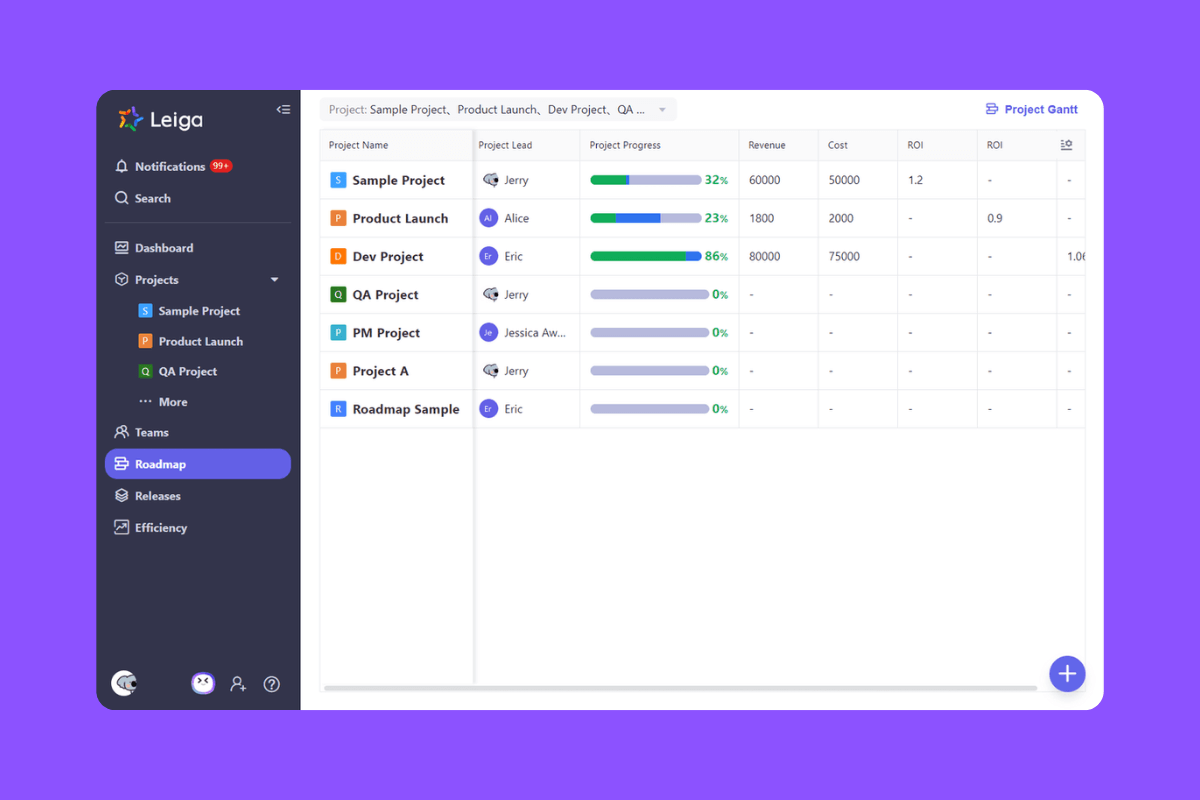
For many organizations, it's not enough just to have collaboration and teamwork. They need to have both in the same place. That's where Leiga comes in: our project management tool has a way of bringing these two concepts together in a practical way that really works for your organization. So, let's take a look at how our tool combines collaboration and teamwork.
Getting Roles and Responsibilities Sorted
Every team member needs to know what they're in charge of and what's expected of them. That's why our tool lets you clearly define ownership and responsibilities right from the start, so everyone knows what's what. This clarity cuts out a lot of confusion and overlap, and removes last-minute panic handovers. It means teams can get on with the job, and make fewer mistakes.
Keeping the Conversation Real-Time
With Leiga, teams can share updates and ask questions as work is happening. The conversation stays connected to the task or project, so there's no getting lost in a long email thread or scattered chat messages. It keeps collaboration focused and speeds up decision-making.
Showing What's Going On
Teams can see at a glance what's being worked on, what's blocking things, and what's coming up next. This improved visibility helps leaders spot potential problems early, lets teams adjust priorities as needed, and keeps everyone aligned - without the need for constant status meetings.
Knowing what they own supports teamwork, and at the same time, open communication and real-time updates make collaboration feel natural and effortless. Shared boards, messaging and, progress tracking all keep teams aligned and connected, even when team members are working remotely.
What We've Learned
Collaboration and teamwork are two essential skills for success in the modern workplace, but they're not the same thing. While they both contribute to success, they work best in different situations.
Collaboration is all about combining different ideas and skills to create something new and solve problems. It's about stepping outside the comfort zone and sharing ideas freely. Think of a startup brainstorming session where ideas are flying around, and anything's possible.
Teamwork, on the other hand, is like a well-rehearsed orchestra. Everyone knows their part and works together to achieve the same goal. This is exactly what's needed for projects that require clear roles and coordinated effort. Imagine a marketing campaign where a strategist, copywriter, and designer all work together to create something amazing, with each one bringing their own expertise to the table.
Want to take your projects to the next level? It all starts with mastering both collaboration and teamwork. Collaboration gives you that spark of creativity and teamwork brings it all together, with everyone working to the same rhythm. Using the right tools can make this process so much more efficient.
Want to learn more about project management? Check out more of our blogs for regular updates and expert tips and keep your project skills on track. You can also try Leiga for free!
- Streamline Your Workflow with Leiga
- Effortlessly automate tasks
- Boost productivity with AI insights
- Free forever — elevate project management
