
.png)
Teams do not fail because they lack talent. They fail because they lack clarity and alignment. Modern teams now operate in a complex and constantly changing environment.
Hybrid work is becoming the norm, and you’re now dealing with cross-functional collaboration and rapidly shifting priorities. With tighter deadlines, everyone on your team is busy, each team member trying to finish tasks on time. But projects still stall, drift, or even blow up in scope.
Deadlines slip, priorities change mid-flight, and your team starts to lose focus.
A clear project roadmap cuts through that noise. It gives your team a shared picture of where you’re going, why it matters, and how you can get to the goal, step by step. With a clear roadmap, you get a steady reference point that holds your team together through the chaos of daily work.
Let’s break down how a solid roadmap improves your alignment, speed, and outcomes and why it’s becoming a non-negotiable for modern teams.

What is a Project Roadmap?
A project roadmap is a high-level strategic overview of your project’s goals, milestones, deliverables, and priority phases. Some teams confuse a roadmap with a feature list or a deadline calendar. But it does more than that.
It highlights the connection between your tasks and the rationale behind them. A real roadmap is a strategic guide that lays out:
- The purpose of a project
- Major phases or milestones
- Sequences of work
- What success looks like
- Roles and responsibilities
- Timelines
A roadmap is not supposed to be hyper-detailed. It’s not meant to change every other day. It’s the guide that keeps everyone on track, working towards the same direction, even when details inevitably evolve.
When teams do not have this anchor, misalignment creeps in fast.
Why Alignment Breaks Down Without a Roadmap
When your projects become more complex, so does your need for clarity. You’ve probably seen and experienced these situations:
- Everyone on your team thinks the goal is slightly different.
- Leadership assumes progress is happening, even when it is not.
- Teams execute tasks based on their own interpretation, not a shared one.
- Teams work on one priority while another is focused on a different task.
- Decisions get rolled back because someone is not aware of the context of tasks.
These are the costs of not having clear, defined goals and priorities. Even the most capable team can lose their momentum without clear paths and shared vision.
A roadmap corrects that. It cuts through confusion and ensures that everyone is on the same page. Not just at kickoff, but throughout the project’s entire lifecylce.

1. Clear Roadmaps Improve Alignment
Keep in mind that alignment is not a one-time event. It’s a constant discipline that your team should practice. You can’t expect people to stay in sync if they’re guessing.
A good roadmap improves alignment in important ways.
Read More: The Dynamics of Dev Team Collaboration: Autonomy and Alignment
Shared Understanding of the Vision
People can perform better when they know why they are doing the task. A roadmap translates the strategy into something practical and understandable.
It answers questions like:
- What problem are we solving?
- What outcome do we want at the end?
- What’s the scope and what’s not?
Without a shared understanding, your team members just assume. But with a clear vision, teams stay grounded.
Role Clarity
Misalignment often comes from overlapping responsibilities. Sometimes, responsibilities even fall through the cracks.
A roadmap defines which members handle certain tasks. It gives your team a guide for who is accountable, who supports, who decides, who gets consulted, and who needs updates. People should not be guessing their part in the project. When roles are clear, your execution becomes smoother.
Shared Priorities
Most teams juggle competing demands and even multiple projects. A roadmap gives you clear priorities so team members start pushing in the same direction. Alignment is the heartbeat of any successful project, and a roadmap keeps that heartbeat steady.
2. Clear Roadmaps Improve Speed
Speed is not about rushing. It’s about removing the friction. And nothing slows a project down like confusion. A well-built roadmap accelerates work by creating a flow.
Less Back-and-Forth, More Doing
When the direction is unclear, teams loop endlessly. Some teams get lost finding the latest version of files or code. Some members get confused about who’s handling specific parts or if the changes are approved. A roadmap reduces these loops. Decisions live in one place, and the logic is documented. People can move faster because they’re not constantly stopping to clarify.
Read More: Top 8 Software Documentation Tools to Streamline Your Workflow in 2024
Fast Decision-Making
A clear roadmap outlines:
- Strategy
- Approach
- Constraints
- Dependencies
With these in place, decisions get made quickly. Teams no longer escalate every small choice because there are already guiding principles.
Fewer Revisions
Most rework comes from misunderstanding, not incompetence. When expectations are vague, teams can build the wrong thing. They then revisit it and redo it, which delays projects even further. A roadmap makes the target clear from the start. Instead of reworking, your team moves forward smoothly.
Predictable Progress
Speed is not just about moving fast. It’s about moving steadily. A roadmap lays out realistic stages so teams can deliver consistently without burning out or trying to finish backlogs every week.
In short, clarity saves you time, and roadmaps give teams that clarity.
3. Clear Roadmaps Improve Results
With better alignment, teams can execute faster, and this almost always leads to better results. But that’s not all that you can get from clear roadmaps.
Teams can produce higher quality work with less confusion and fewer surprises as well.
Read More: 5 Strategic Moves That Drive Better Project Outcomes
Better Scoping
Projects derail because of scope creep. A roadmap defines:
- What’s included
- What’s excluded
- What “done” looks like
With this in place, conversations stay grounded. It becomes easier to push back on distractions too. This prevents the project from getting out of control.
More Realistic Delivery
Teams make better forecasts when they understand the full path. A roadmap helps determine:
- When each stage should realistically finish
- Where risks are
- Where flexibility is needed
- What resources are required
With better planning, you get smoother delivery.
Clearer Stakeholder Management
Stakeholders hate surprises. They want visibility, updates, and the confidence that the project is on track. Roadmaps give you a simple, visual way to communicate progress, address risks, set expectations, and even show what’s next.
It reduces noise, builds trust, and makes everyone feel informed.
Stronger Collaboration
When people work from the same plan, collaboration becomes more natural. Teams see how they contribute to the bigger picture. Silos break down, and feedback becomes more meaningful.
Great results come from great coordination. A roadmap is the structure that holds that coordination together.

What Makes a Roadmap Effective
Not every roadmap works. Some are just decorative slides that never influence real work. Some are so detailed that understanding them turns into another task list. Others are so vague they do nothing.
Here are some characteristics of an effective roadmap:
- Simple – It shows the essence of the project, not the noise.
- Visual – People can understand the whole picture at a glance.
- Connected to Strategy – Project planning and tactics should connect to strategy to avoid confusion.
- Flexible – It guides the project but does not trap the team.
- Accessible – Everyone should know where to find the roadmap at any time.
- Updated Responsibly – Roadmaps should not be updated daily or hourly. Only when something truly changes.
- Ties Back to Outcomes – Output is your deliverable. Outcome is the impact. Roadmaps should be able to tie the output to the outcome.
When a roadmap has all these characteristics, it stops being a document and becomes a project management tool that drives results instead.
How to Build a Clear Roadmap
Here’s a straightforward way to create a roadmap.
Step 1: Define the Purpose
State the goal in one or two sentences.
- What problem are you solving?
- Why does it matter?
Step 2: Capture the Desired Outcomes
Keep the outcomes high-level but also specific enough to guide decisions. Outcomes should be able to portray what success looks like and how your team will measure it.
Step 3: Identify Constraints and Assumptions
This avoids unrealistic expectations later on.
Step 4: Break the Project Into Clear Phases
Think in terms of milestones and not tasks.
Step 5: Map Dependencies
Map out task dependencies and which ones need to happen first. You should also outline which tasks can run in parallel so no team member is stuck on waiting for other tasks.
Step 6: Assign Responsibilities
Each phase needs an owner, supporters, and decision-makers. Assign these responsibilities to the right people, but always be mindful of their capacity.
Read More: Team Workload Management: How to Balance Capacity and Prevent Burnout
Step 7: Add Timelines
You don’t need to add the exact dates. Just ranges or time blocks are enough.
Step 8: Highlight Risks and Mitigations
Always anticipate project risks such as delays and roadblocks. This keeps stakeholders aware and reduces panic later on.
Step 9: Review and Align
Walk everyone through the roadmap. Get feedback from your team and adjust as necessary. Make sure everyone truly understands it.
Step 10: Maintain
A roadmap is a living tool. Update only when something changes at the strategic level.
Do these steps well and you’ll set up your project for a much smoother execution.
Why Many Teams Fail to Build Good Roadmaps
Roadmaps are powerful, but some teams do not build and use them constantly. This is because they fail to build good roadmaps. There are also other reasons, such as:
- They’re too busy executing to build a plan
- They mistake urgency for progress.
- They think the roadmap needs to be perfect.
- They overcomplicate it into a giant document that no one reads.
- They think everyone already knows the plan
- They fear committing to structure because things might change.
Ironically, the lack of a roadmap causes exactly the chains that teams are trying to avoid. Remember that when it comes to roadmaps, it’s not about perfection. You should focus on direction.
How Leiga Helps Teams Build Clear, Flexible Project Roadmaps
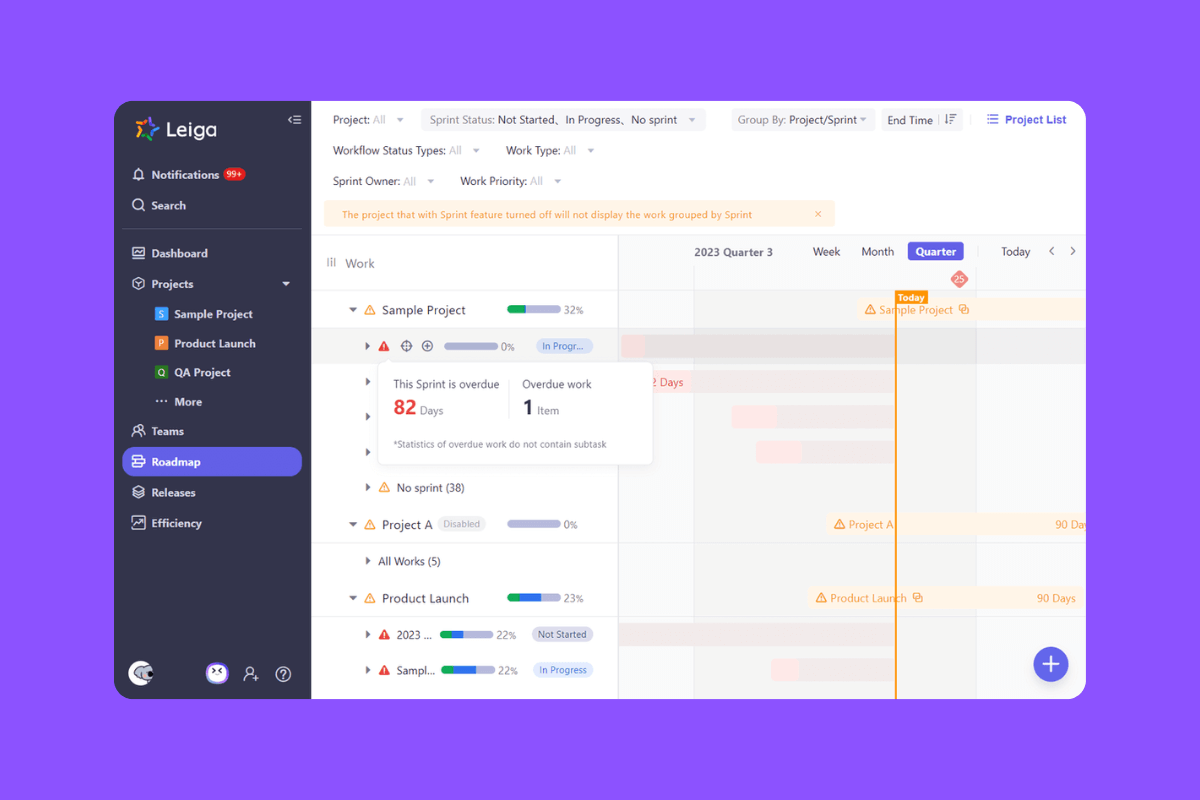
A strong roadmap should be easy to build, easy to update, and easy to understand. This is where Leiga can help your team.
Leiga, an AI project management software, is designed to help technical teams shape ideas into organized, visual, and aligned plans without the usual friction of traditional project management tools.
Here’s how Leiga supports teams in creating clear project roadmaps that actually get you results:
1. Turn scattered ideas into structured plans.
You can start messy with raw notes and brainstorms, and Leiga helps turn these into a clean roadmap. No more wrestling with complicated interfaces or manually stitching documents together.
2. Visual roadmaps without the hassle.
Experience the ease of creating visual roadmaps with Leiga. Drag-and-drop phases, adding timelines, and creating dependencies. Everything is visual and intuitive, so stakeholders get it instantly.
3. Built-in clarity around roles and responsibilities.
Roadmaps in Leiga let you define owners, contributors, and decision-makers. It’s baked into the flow; no extra documents are needed.
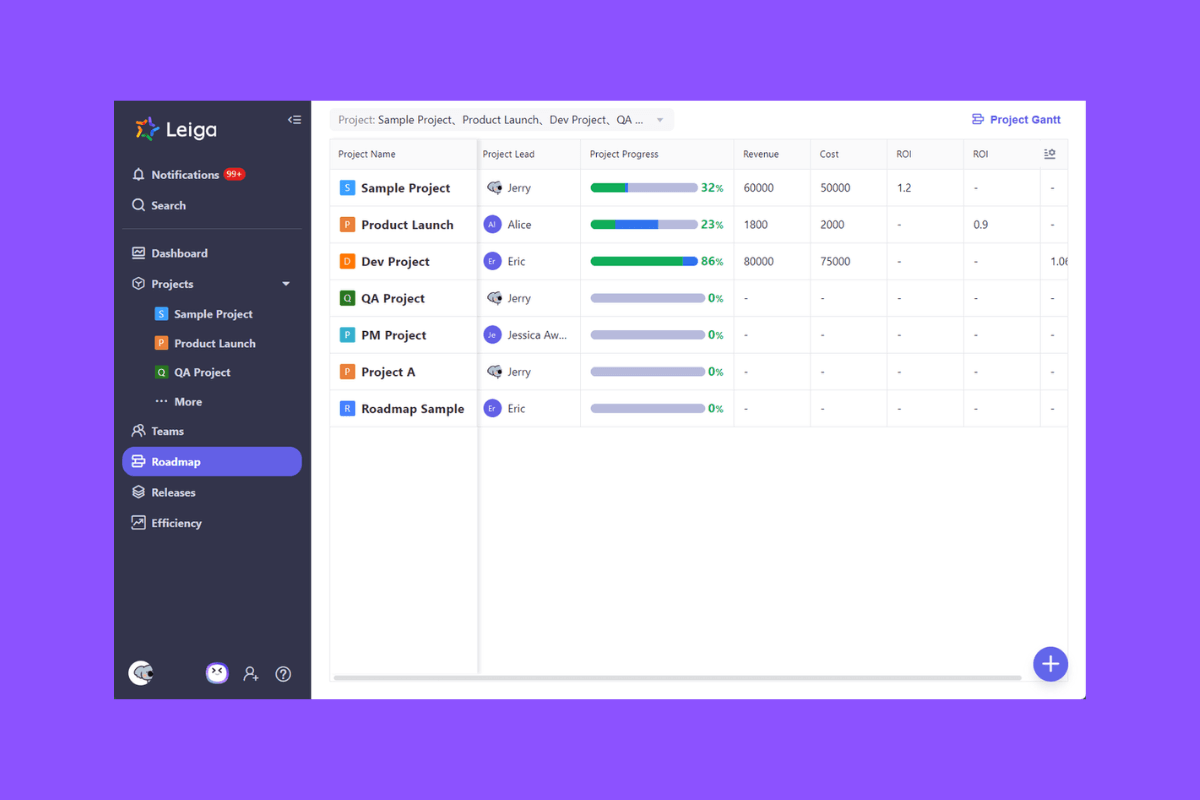
4. Easy updating without breaking the whole plan.
Change a timeline? Shift a priority? Reassign a phase? Leiga keeps your roadmap intact while reflecting these updates cleanly.
5. A single source of truth.
No more version chaos. Everyone on the team sees the same roadmap, same context, and the same expectations.
6. Connect strategy to execution.
You can tie the roadmap directly to tasks, discussions, and documents. It’s all in one centralized workspace, so nothing gets lost.
7. Clear communication for stakeholders.
Share the roadmap with anyone, whether it’s your entire team, leadership, or clients. It gives them a clear, digestible view of progress.
A clear project roadmap is one of the simplest ways you can improve alignment, speed, and results. It gives teams direction, reduces confusion, and keeps efforts focused on what truly matters. But clarity does not happen by accident. You need the right structure and the right tools.
Leiga is built for this, helping teams transform scattered ideas into organized plans that drive real progress.
If your team has ever felt misaligned, overwhelmed, or stuck mid-project, start with a clear roadmap. It’s the foundation that makes everything else easier.
Leiga does not just help you make a roadmap. It helps your team live by it. Achieve clarity and peak productivity. Start with Leiga today.
- Streamline Your Workflow with Leiga
- Effortlessly automate tasks
- Boost productivity with AI insights
- Free forever — elevate project management
