

Cross-functional teams are increasingly becoming the backbone of modern organizations, especially in SaaS, tech, digital-first businesses, and fast-moving product companies. By pulling in members from engineering, product, marketing, design, sales, and operations, companies can ship faster, collaborate smarter, and deliver more aligned outcomes.
But anyone who has worked in a cross-functional setup knows one thing: coordination is hard. Very hard.
Before comparing Asana and Leiga, it’s important to understand the unique challenges cross-functional teams face, and why the right project management platform can make or break execution.
The Challenges of Cross-Functional Teams
Cross-functional teams need more than a basic task tracker. They need a platform that aligns different workflows, centralizes communication, and keeps projects moving even when multiple departments are involved.
Both Asana and Leiga are popular choices, but they’re built with very different philosophies. Below is a deep comparison of how each tool performs in real cross-functional environments, and which one ultimately helps teams ship faster with fewer surprises.
Read More: Async Collaboration: The Best Strategy for Managing Cross-Time-Zone Teams
1. Different Workflows, Different Languages
An engineer works in sprints. A marketer works on campaigns. A designer works in creative iterations. A product manager works with backlogs, specs, and deliverables.
Cross-functional teams must combine all these approaches. Traditional platforms often fall short because they force everyone into the same rigid workflow, even though each team works differently.
2. Misalignment on Priorities
Marketing needs a feature today for a launch. Engineering needs one more sprint to stabilize the release. Sales needs a quick fix for a key account.
Prioritization becomes a daily negotiation, often based on opinions instead of real data.
3. Information Scattered Across Tools
Docs on Google Drive. Tasks in different apps. Updates in Slack threads. Timelines in sheets that no one opens again. When information isn’t centralized or actionable, teams lose hours just trying to sync.
4. Invisible Risks That Derail Projects
Cross-functional teams rely on multiple owners. A delayed dependency in one department can quietly snowball and block the entire project. Unfortunately, many project tools only highlight issues after they’ve become urgent.
5. Difficult Stakeholder Updates
Everyone wants visibility, but no one has time to manually prepare updates. Most cross-functional teams spend too much time reporting and too little time actually executing.
6. Lack of Predictability
Executives expect timelines. Teams expect clarity. Customers expect consistency.
But without real forecasting that reflects actual working patterns across functions, planning becomes guesswork. These challenges highlight why the choice of project platform matters. Cross-functional teams need more than task lists. They need alignment, automation, clarity, and accurate prediction.
With that context, let’s dive into Asana vs. Leiga and which platform is truly built for the complexity of cross-functional work.
Read More: Guide to AI Integrations and Workflow Automation for Your Tech Stack
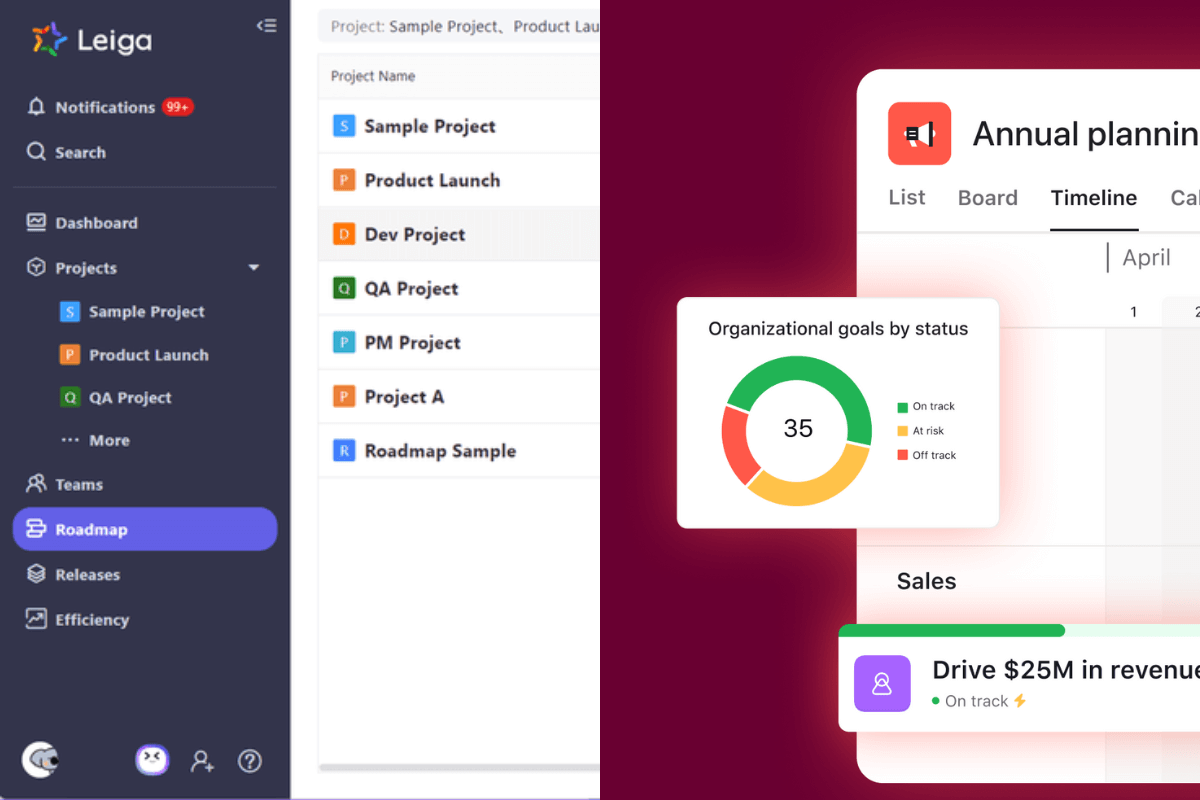
Asana vs. Leiga: A Deep Comparison for Cross-Functional Teams
Cross-functional teams thrive when communication is clear, workflows are aligned, and tools don’t get in the way. In this section, we’ll take a closer look at how Asana and Leiga stack up. Breaking down their strengths, limitations, and what each platform offers for teams handling multiple projects, priorities, and work styles.
1. Ease of Use and Adoption
Asana
Asana is well-known for its clean interface and ease of onboarding. Teams can quickly create projects, assign tasks, set due dates, and manage checklists. For general project tracking, Asana works well, especially for marketing, ops, and general business teams.
However, for engineering-heavy cross-functional teams, Asana’s simplicity can become a limitation. It lacks built-in technical workflows (like sprint planning or backlog structures) without heavy customization or additional tools.
Leiga
Leiga is built specifically for project teams that work cross-functionally. It blends simplicity for non-technical roles with structure for technical teams without requiring a complex setup.
Leiga’s interface is designed around real project behaviors, making it intuitive for engineering, product, and business teams alike. The platform reduces the learning curve by automating repetitive elements like status updates, risk detection, and forecasting, making adoption much smoother across varied roles.
Overall Assessment: Leiga Wins
For teams with diverse workflows and technical + non-technical members, Leiga offers more alignment with less effort.
2. Collaboration Across Multiple Departments
Asana
Asana provides good collaboration features such as comments, task ownership, file attachments, and shared boards. But cross-functional teams often require more complex interactions:
- Dependencies across multiple teams
- Shared OKRs and multi-layered goals
- Centralized updates for executives
- Simultaneous visibility into sprints, deadlines, and campaigns
Asana can support this, but only with heavy manual coordination and layers of custom fields, workspaces, and rules.
Leiga
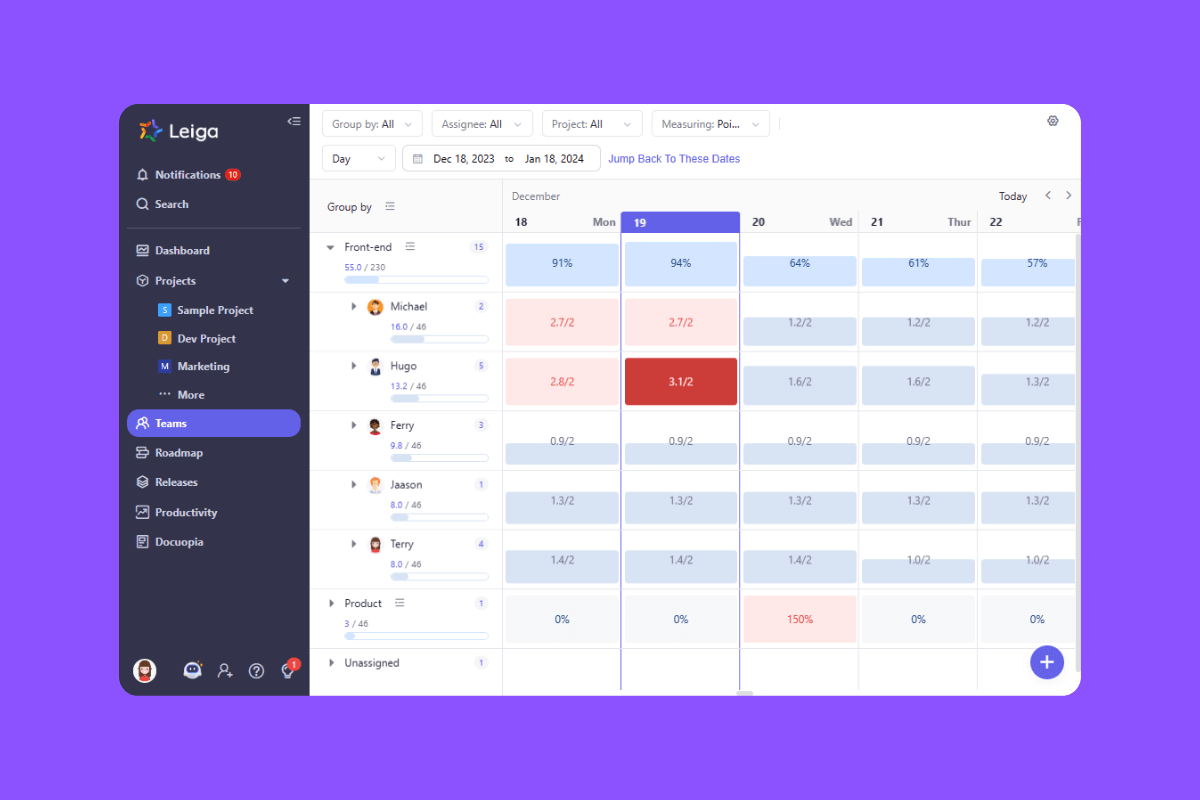
Leiga was built around real-world cross-functional flows. It centralizes project planning, execution, and reporting so teams stay aligned without extra setup.
Leiga helps teams collaborate by:
- Connecting tasks, milestones, dependencies, and deliverables across departments
- Providing shared visibility without overwhelming users
- Offering dynamic insights and risk alerts drawn from real work behavior
- Auto-generating summaries, status updates, and executive reports
Instead of collaboration being an extra step, Leiga makes it the default.
Overall Assessment: Leiga Wins
Cross-functional collaboration is at the core of Leiga’s design, while Asana relies heavily on manual structure to achieve the same effect.
Read More: Async Workflows: How Project Management Tools Support Remote Teams
3. Workflow Flexibility
Asana
Asana offers versatile project management. It has boards, lists, timelines, and calendars, but requires teams to adjust their workflows to the tool. Complex workflows often lead to:
- Multiple parallel projects
- Duplicate tasks
- Manual reporting or summary boards
- Disconnected timelines
Teams often end up using Asana plus other tools to fill the gaps.
Leiga
Leiga adapts to the team, not the other way around. It supports:
- Product roadmaps
- Engineering sprints & backlogs
- Marketing campaign timelines
- Cross-functional initiatives
- Feature releases
- Dependencies across workflows
Leiga’s advantage is that all these workflows coexist in a single system without forcing uniformity. Each team can work the way they need while still staying connected to the overall project.
Overall Assessment: Leiga Wins
For cross-functional teams with different methods, Leiga provides more flexibility with less administrative overhead.
4. Visibility, Reporting, and Alignment
Asana
Asana offers dashboards, goals, and timeline views, but they depend heavily on accurate manual input. Reporting can look impressive but often fails to reflect what’s actually happening, especially when people forget to update tasks (which is common in cross-functional setups).
Leiga
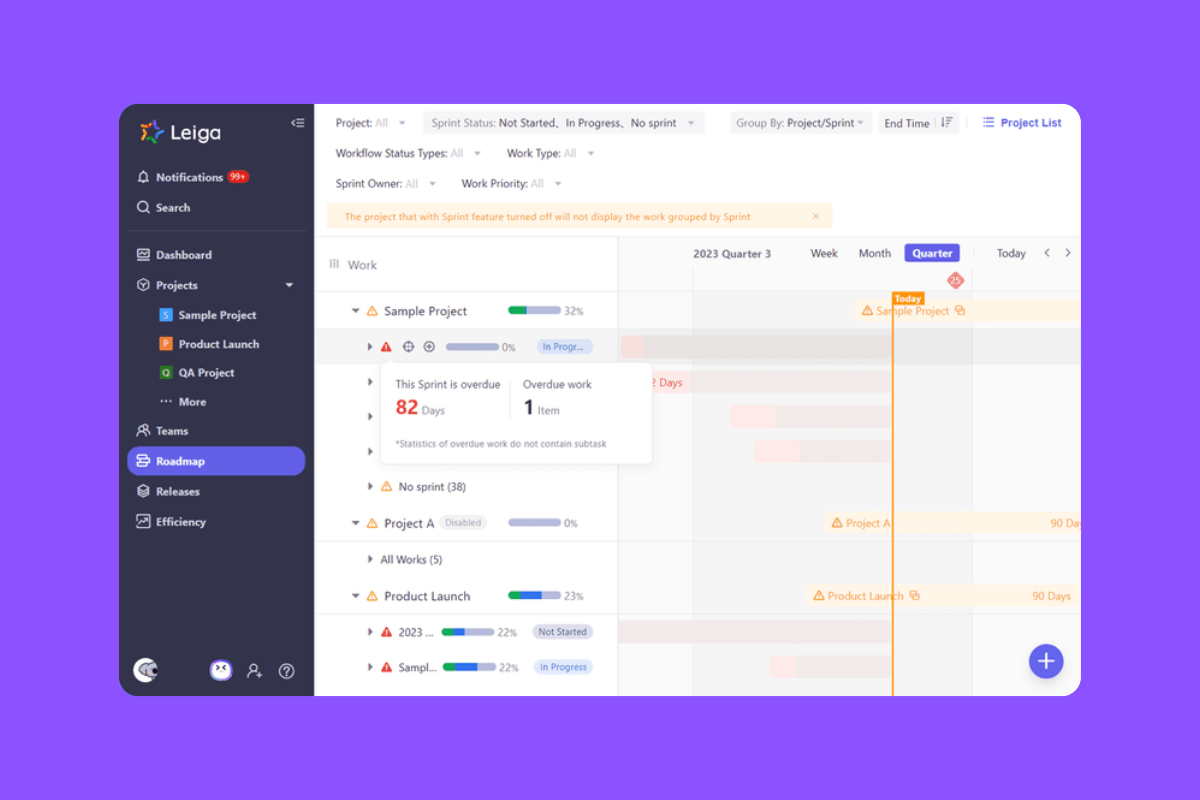
Leiga turns real work behavior into real-time visibility. It automatically understands project patterns, surfacing:
- bottlenecks
- slippages
- delays
- risk factors
- work velocity
- completion probabilities
Leiga generates accurate project reports for project managers, team leads, and executives without requiring teams to constantly update fields.
Overall Assessment: Leiga Wins
If your team struggles with manual updates or inconsistent reporting, Leiga solves this with real-time intelligence.
5. Predictive Capabilities
Asana
Asana offers timeline projections, but they’re based solely on due dates—not actual work patterns. If one team falls behind, Asana won’t easily show the ripple effect across all functions unless you manually adjust timelines.
Leiga
This is where Leiga stands apart. Its prediction engine analyzes:
- historical work habits
- dependencies
- workload distribution
- execution patterns
- actual pace of work
Instead of relying on optimistic due dates, Leiga gives realistic probability-based forecasts and alerts. It answers questions like:
- “Are we actually going to hit this deadline?”
- “What’s likely to slip in the next two weeks?”
- “Where is risk forming that no one has noticed yet?”
For cross-functional teams, where unpredictability is normal, this level of insight is game-changing.
Overall Assessment: Leiga Wins
If your team values reliable forecasts and proactive risk visibility, Leiga is the better platform.
Read More: Team Workload Management: How to Balance Capacity and Prevent Burnout

6. Automation and AI Support
Asana
Asana has recently added some automation features and limited AI tools. They help with summarization, task suggestions, and rule-based triggers. However, these features still depend on teams keeping Asana updated manually.
Leiga
Leiga uses AI not as a “nice to have,” but as the engine of the platform.
Leiga’s AI:
- Detects risks
- Predicts delivery
- Generates progress summaries
- Flags issues based on real work patterns
- Helps project managers handle execution with less manual oversight
- Reduces reporting time drastically
- Provides auto-generated executive overviews
Leiga is built for PMs, team leads, and engineering-heavy teams that need clarity, not just automation.
Overall Assessment: Leiga Wins
Leiga’s AI isn’t an add-on; it’s the foundation.
7. Handling Complex, Multi-Team Projects
Asana
You can run complex projects in Asana, but only with:
- extensive manual structuring
- layers of custom fields
- multiple project boards
- frequent check-ins
- external spreadsheets
- constant updates from each department
Asana starts to feel stretched when projects exceed a certain level of complexity.
Leiga
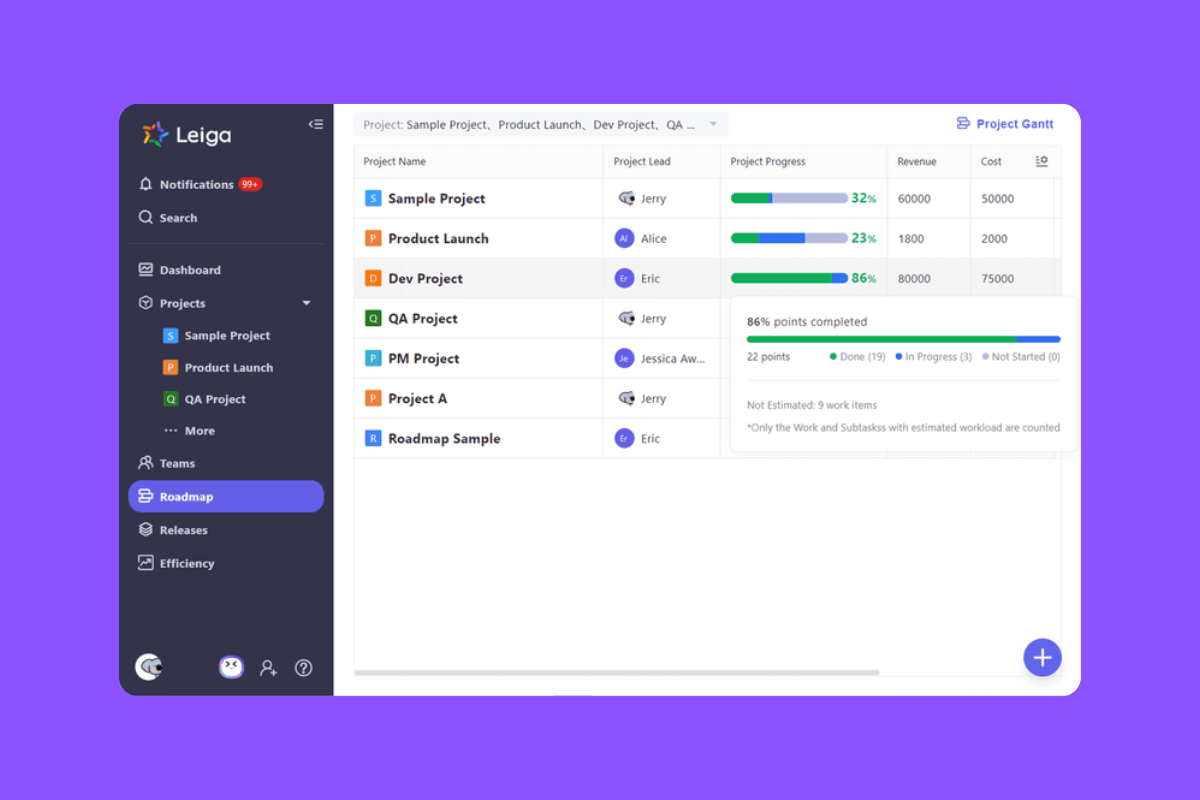
Leiga thrives in multi-layered, cross-functional projects. It consolidates everything:
- team-level execution
- project milestones
- dependencies
- task management
- launch plans
- cross-team updates
It brings structure without requiring each team to manage it manually.
Overall Assessment: Leiga Wins
Leiga scales effortlessly with complexity, while Asana requires heavy user effort.
Read More: AI-Powered Task Management Software: A Game Changer for Dev Teams
8. Cost and Value
Asana
Asana’s pricing is on the higher side, and many advanced features require premium tiers. For cross-functional teams, you often need paid add-ons or integrations to make the system efficient.
Leiga
Leiga provides enterprise-grade features, especially forecasting, insights, and advanced reporting. This is without requiring multiple add-ons. For teams that want predictability, automation, and execution clarity, the AI project management software delivers more value per dollar.
Overall Assessment: Leiga Offers Stronger ROI
Leiga offers better pricing and features, especially for teams that need visibility and alignment across functions.
So Which Is Better for Cross-Functional Teams?
Asana is great if:
- Your team is small or non-technical
- Work is straightforward
- You need a simple task manager
- You want quick adoption without complex workflows
Asana is reliable and user-friendly, but not built for deep cross-functional complexity.
Leiga is better if:
- You work across product, engineering, and business teams
- You manage multi-layered projects with dependencies
- You need accurate predictions, not assumptions
- Your team struggles with manual updates
- You need better visibility and proactive risk detection
- You want automated reporting and insights
- You want to scale collaboration without chaos
Leiga is built specifically for cross-functional execution, especially in fast-moving SaaS and tech environments.
Read More: Bridging Humans and AI: How Leiga Empowers Modern Project Managers
Why Leiga Is the Better Choice for Cross-Functional Teams
For teams made up of people from different departments — marketing, sales, product, design, and more — coordination isn’t a goal; it’s essential for success. That’s where Leiga shines. In this section, we’ll explore how Leiga is structured and why its features make it especially powerful for cross-functional teams who need clarity, flexibility, and seamless collaboration.
Designed for Real-World Cross-Functional Collaboration
Leiga was created around the reality of modern project work: teams are diverse, interdependent, and fast-paced. Instead of forcing everyone into one rigid workflow, Leiga adapts to each team while maintaining a unified structure across the organization.
Read More: Reducing Cognitive Load in Dev Teams Through Connected Tooling
Predictive Insights That Remove the Guesswork
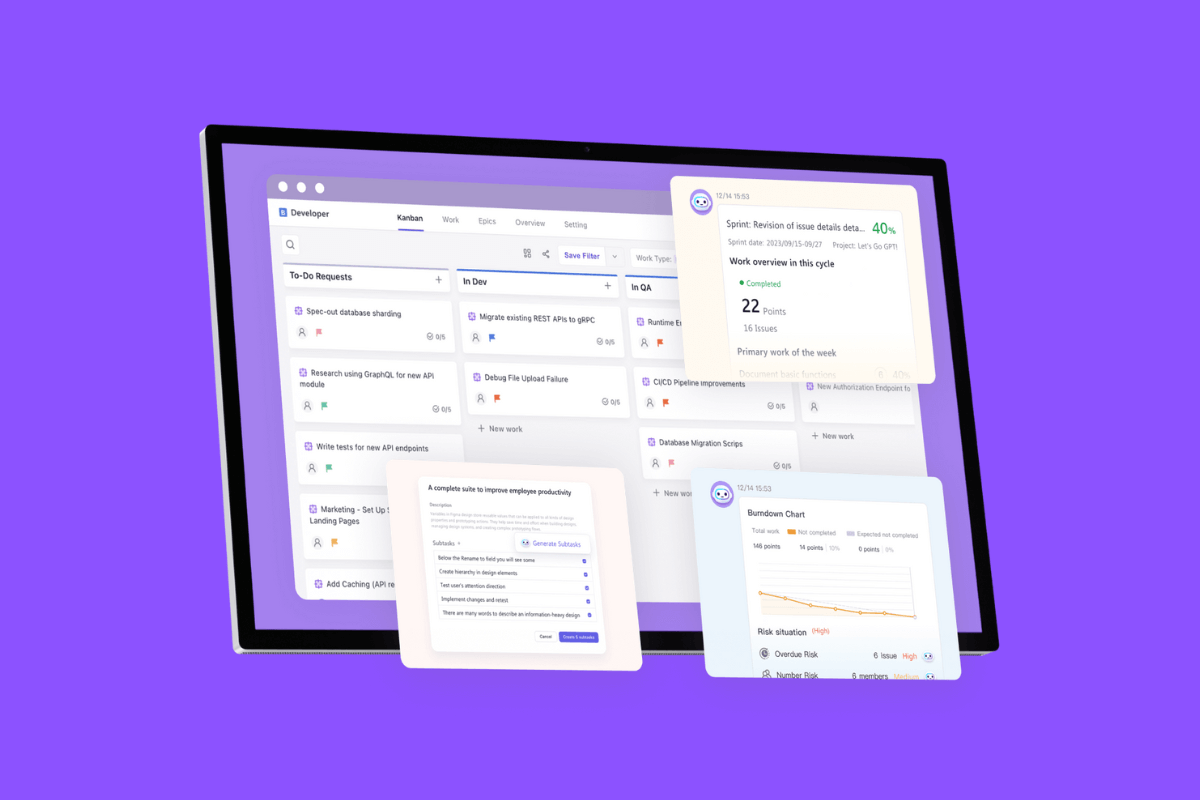
With its real-time prediction engine, Leiga gives teams clarity on what’s likely to slip and why. Cross-functional teams no longer rely on manual updates or gut feel. Leiga surfaces risks early, allowing teams to take action before delays become blockers.
Automation That Reduces Workload, Not Adds To It
Leiga automates the tedious parts of project management:
- Status reports
- Cross-team updates
- Executive summaries
- Risk identification
- Forecasts
- Task progress insights
Instead of spending hours on alignment meetings and reporting, teams can focus on execution.
A Single Source of Truth for All Teams
Leiga centralizes execution from engineering sprints to marketing campaigns to product releases. Everyone works in their own style but contributes to one unified project picture. This is essential for cross-functional success.
Built for Complexity, Not Just Tasks
Leiga manages interwoven dependencies, multi-team timelines, shifting priorities, and dynamic workloads. Things most tools oversimplify.
Both Asana and Leiga are strong tools, but they serve different purposes. Asana is a great general project tracker. Leiga is built specifically for complex, cross-functional teams.
If your work involves multiple departments, internal handoffs, high visibility, and complex timelines, Leiga offers the clarity, automation, and predictive intelligence that cross-functional teams need to truly move fast and align better.
Experience seamless collaboration across teams with Leiga. Try it for free today.
- Streamline Your Workflow with Leiga
- Effortlessly automate tasks
- Boost productivity with AI insights
- Free forever — elevate project management
