

Delivering a successful project is not just about hitting deadlines or staying within your budget. It’s about creating real impact. Whether you’re a project manager, developer, designer, marketer, or operations lead, the pressure to improve your team’s efficiency and outcomes is constant. And with hybrid teams becoming the norm, strategic alignment matters more than ever.
The good news? Better project outcomes are not just a result of more effort. They stem from using the right strategies.
In this blog, we’ll explore five strategic moves that your team can adopt for better consistency and quality of work. These strategies also help reduce delays and improve collaboration for cross-functional teams.
1. Build Aligned and Outcome-Driven Planning
Most projects don’t fail because of execution. It could be because teams were never aligned in the first place.
Project planning is not just about creating timelines or filling out a Gantt chart. It’s about ensuring that everyone understands why the project exists, what metrics are used to measure success, and how each team member contributes.
The alignment transforms planning from a mere document into a true strategic foundation.
Why This Matters
- Teams waste less time on misaligned tasks.
- Stakeholders have clarity when it comes to priorities.
- Developers and technical teams understand the reasoning behind requirements. Not just the tasks assigned to them.
- Project scope becomes more realistic because your team is aligned when it comes to goals and collaboration.
Read More: Async Collaboration: The Best Strategy for Managing Cross-Time-Zone Teams
How to Execute This Strategy
Start with a purpose, not features.
Before you define tasks or deliverables, clarify the problem that your project solves. What customer need does it address? What metric needs improvement?
Use shared frameworks.
Teams have different preferences. For example, technical teams prefer requirement specs, while business teams prefer narratives or outcome statements. For better alignment, find and use a format that works across all functions. These can include OKRs, user stories, or other formats.
Create cross-functional meetings.
Meetings with clear agenda help improve alignment. Invite all key individuals and not just leadership. Let designers, developers, QA, analysts, or marketers ask real questions.
The Result
Teams work with clarity, resulting in fewer revisions and escalations. Project plans also predict real-world outcomes.
2. Strengthen Communication Through Context, Not Volume
If there’s one thing we can consider as a universal truth across all teams, it’s that more communication doesn’t mean better communication.
In fact, you’ve probably experienced that many delays happen because teams communicate too much but poorly. Endless comment threads, vague updates, unclear requirements, and scattered discussions across tools. These cause confusion rather than give your team clarity.
Strategic communication is about providing the right context at the right time. This is so decisions can be made quickly and confidently.
Read More: The Hidden Costs of Context Switching for Dev Teams
Why This Matters
- It reduces guesswork and back-and-forth communication.
- Prevents blockers caused by missing information or context.
- Ensures stakeholders are not overwhelmed with too many details.
- Enables objective discussions instead of conflicts due to different opinions.
How to Execute This Strategy
Adopt structured communication.
Instead of long explanations, use formats that are direct.
- “Here’s what we know.”
- “Here’s what we don’t know yet.”
- “Here’s what we need to move forward.”
Centralize discussions.
Make sure that critical conversations about the project happen in one system. Context is often lost when communication is scattered across chats and emails.
Maintain decision logs.
A simple structure can help keep history clear. Your team can use a structure such as Definitions + Rationale + Date + Task Owner.
Reduce noise.
Keep in mind that not every update requires a meeting. Async updates are even more effective, especially for remote or hybrid teams.
The Result
Teams can move faster, avoid misunderstandings, and easily revisit decisions without digging through a huge volume of data, old messages, or threads.
3. Adopt Flexible but Controlled Execution Processes
Rigid processes can slow you down. Chaotic processes break you. It’s important for your team to find the right balance: structure with flexibility.
This balance enables teams to adapt to shifts. From new requirements, resource changes, or discovered risks, all without losing control of your project.
Why This Matters
- Keeps cross-functional work synchronized.
- Ensures execution remains predictable even when your plans change.
- Helps your team maintain quality standards while staying agile.
- Builds a scalable process that works across multiple projects.
How to Execute This Strategy
Choose the right project framework.
Choose from Scrum, Kanban, hybrid Agile, or traditional project management. There’s no one-size-fits-all. Base the framework on what your team truly needs, not on trends.
Set clear process expectations.
Everyone on the team should know:
- How tasks are added
- How priorities shift
- When updates should be given
- What “done” or “complete” means
- How handoffs are managed
Implement quality gates.
These checkpoints ensure teams maintain quality even when under pressure. Examples can include code review, design approval, QA cycles, or stakeholder validation.
Use automation when possible.
Automation can reduce repetitive work and even human error in many areas, like reporting, notifications, and approvals.
The Result
Teams gain predictability while maintaining agility. This leads to improved timelines, fewer bottlenecks, and better output quality.
Read More: Guide to AI Integrations and Workflow Automation for Your Tech Stack
4. Leverage Data for Smarter Decisions
Data is not just an analytics feature. It’s your team’s strategic advantage. High-performing teams use data at every stage of a project, not just at the end.
From planning and prioritization to risk management and workload balancing, data provides the clarity that intuition cannot.
Why This Matters
- Decisions become objective, not emotional.
- Teams can identify trends before they escalate into issues.
- Resources are allocated based on actual workload.
- Stakeholders can visualize progress and understand blockers clearly.
How to Execute This Strategy
Use historical data for planning.
Look at past project durations, task completion times, and error rates to inform timelines instead of relying on “best-case scenario” guesses.
Track progress through real metrics.
Some examples of metrics you can track are cycle time, burn-down rate, workload distribution, and even bug frequency.
Adopt dashboards that update automatically.
Manual reporting wastes a lot of time and often becomes inaccurate. Automated dashboards give teams live visibility on progress.
Review data regularly.
Weekly insights can help your team make micro-adjustments rather than waiting for an incident that is too late to fix.
The Result
Leaders and contributors get transparency with project insights, allowing smarter decisions and more predictable outcomes.
Read More: Smarter Project Reports with AI: Turning Every Update into Actionable Insight
5. Create a Culture of Continuous Improvement
The best teams don’t wait for failure. They learn continuously. Continuous improvement is the strategic move that separates teams stuck in reactive mode from those operating at a higher level.
Why This Matters
- Teams avoid repeating the same mistakes.
- Efficiency increases with every iteration.
- Processes, documentation, and workflows evolve with team needs.
- Team morale improves because members feel empowered.
How to Execute This Strategy
Implement regular retrospectives.
You can focus on what worked, what didn’t, and what your team needs to change. Make sure to keep them short, structured, and actionable.
Reward innovation and efficiency.
Celebrate when a team member improves a process, finds a better tool, or identifies a smarter workflow.
Document learnings.
A team knowledge base ensures that insights don’t disappear when people transition or when your projects end.
Eliminate unnecessary tasks.
Every quarter, review what’s slowing your team down. Check reports, tools, approvals, and processes. Remove what no longer adds value and optimize processes that can cause bottlenecks.
The Result
Projects become smoother, faster, and more predictable over time. Teams develop a strong sense of ownership and growth.
How Leiga Helps Teams Implement These 5 Strategic Moves
Implementing the five strategies to improve project outcomes becomes significantly easier when teams use an AI project management platform. You get better alignment, clarity, and cross-functional collaboration.
That’s exactly where Leiga elevates project delivery. Below is how Leiga directly reinforces each strategic move.
1. Alignment Through Unified Project Planning
Leiga provides a centralized workspace where teams can map goals, define outcomes, and convert them into actionable tasks. The structure ensures everyone understands the “why” behind the work. From developers, product managers, and designers to marketing.
Features That Help:
- Strategic roadmaps
- Goal > task hierarchy
- Team-specific views for better alignment.
2. Context-Rich Communication, Not Noise
Instead of long message threads scattered across apps, Leiga keeps discussions directly linked to tasks, documentation, or decisions. This eliminates confusion and ensures that everyone on your team can see the full context instantly.
Read More: Reducing Cognitive Load in Dev Teams Through Connected Tooling
Features That Help:
- Threaded, structured discussions
- Centralized communication within tasks
- Clear decision logs and updates
3. Flexible Yet Controlled Execution
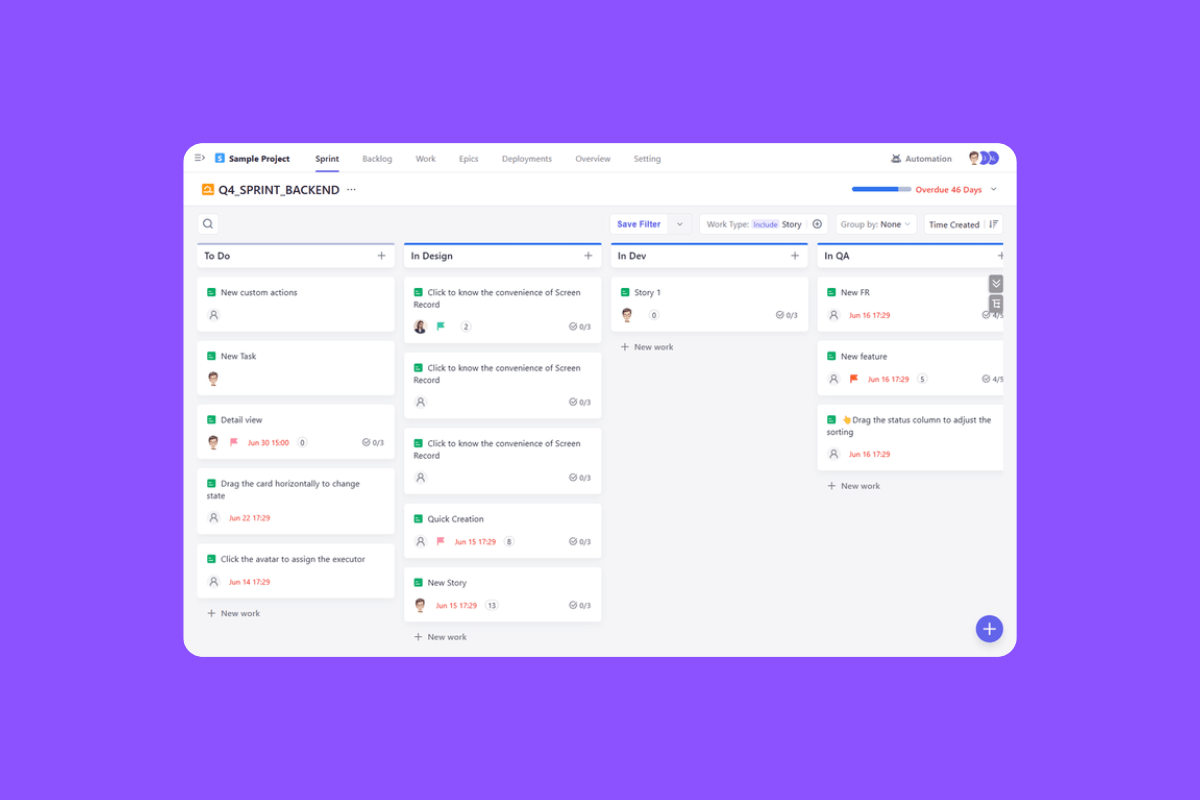
Leiga’s customizable workflows let teams choose sprint-based, Kanban-style, or hybrid project structures. Automated rules keep processes consistent while giving your team the flexibility to work the way you prefer.
Features That Help:
- Custom workflows
- Automation rules
- Reusable project templates
4. Smart, Real-Time Insights for Data-Driven Decisions
Leiga provides live dashboards that track progress, workload, and project health. This empowers teams and project managers to make informed decisions without manual reporting.
Features That Help:
- Real-time dashboards
- Workload and capacity views
- Cycle time, progress, and quality metrics
5. Built-In Tools for Continuous Improvement
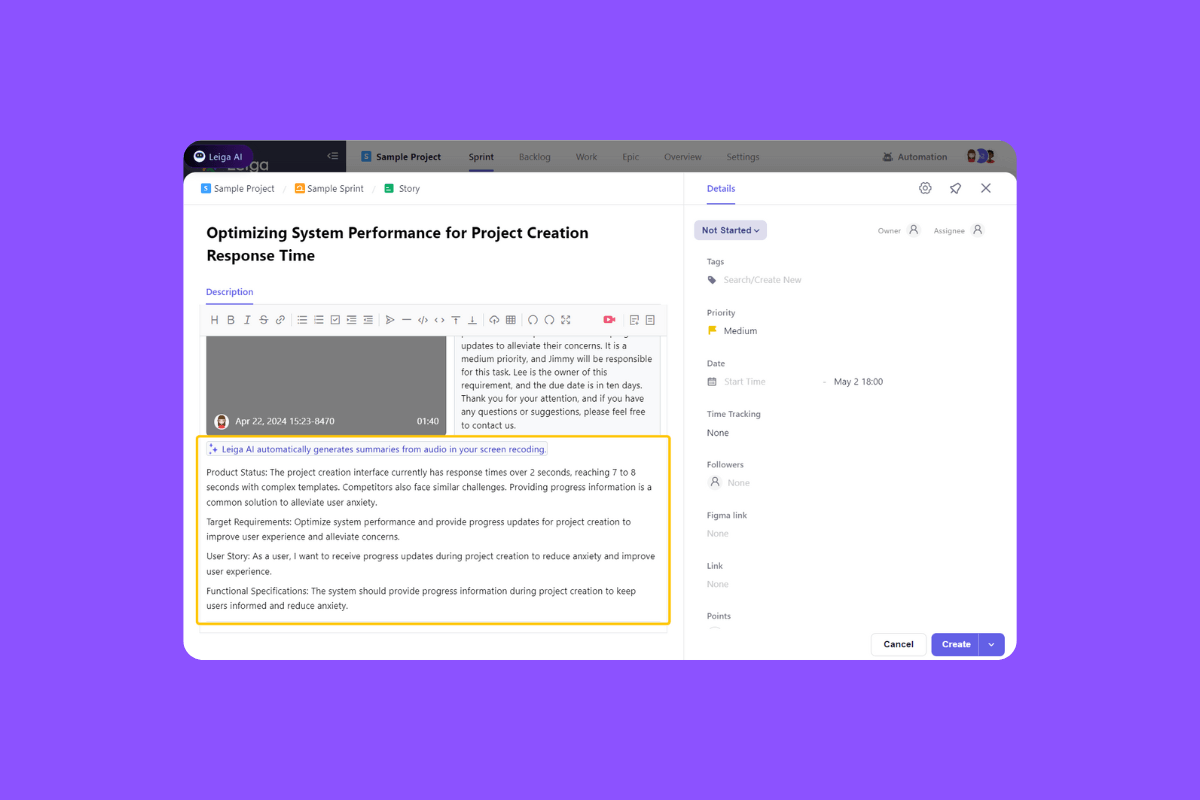
Retrospectives, insights, and structured documentation make it easy for teams to review, learn, and improve after every sprint or project.
Features That Help:
- Retrospective templates
- Knowledge base integration
- Automatic tracking of team performance trends
Read More: AI-Powered Task Management Software: A Game Changer for Dev Teams
Better project outcomes don’t happen by chance. They are the result of consistent, strategic decisions. The five strategies we explored are all achievable with thoughtful practices and the right tools.
From aligned planning, context-driven communication, flexible execution, data-backed decisions, and a culture of continuous improvement.
With Leiga, an AI project management tool, these strategies become not only easier but also scalable across teams and even entire organizations. Leiga ensures that every contributor, stakeholder, and projects benefit from clarity, alignment, and informed decision-making.
You get stronger outcomes, higher efficiency, and more predictable delivery. If you want your team to operate at a higher level and deliver projects with confidence, structure, and alignment, Leiga gives you the competitive edge that you need. Try it for free today!
- Streamline Your Workflow with Leiga
- Effortlessly automate tasks
- Boost productivity with AI insights
- Free forever — elevate project management
