

Cross-functional alignment tends to look strongest at the start of the year, right after planning wraps up. Roadmaps are approved. Priorities are agreed on. Everyone leaves the kickoff meetings feeling confident.
Then reality hits.
By February or March, teams are already drifting. Product is pushing new priorities. Engineering is overloaded. Marketing is working off a different timeline. Leadership starts asking for updates that don’t quite match what teams are actually doing.
This isn’t a people problem. It’s a systems problem.
Early-year alignment breaks down because most organizations mistake planning for alignment, and those are not the same thing. Alignment isn’t something you set in January. It’s something you have to maintain continuously, especially when conditions change.
This article breaks down why alignment fails for cross-functional teams so early in the year, the hidden patterns behind it, and what actually works to fix it, without adding more meetings or bureaucracy.

What Cross-Functional Alignment Really Means (and Why It’s Fragile)
Cross-functional alignment isn’t about agreement in a planning document. It’s about shared understanding across teams:
- What matters most right now
- Why those priorities exist
- How each team’s work connects to outcomes
- What trade-offs are acceptable when things change
The problem is that alignment depends on context. And context decays fast.
According to a Harvard Business Review study, 75% of cross-functional teams are dysfunctional due to unclear priorities, misaligned incentives, and poor visibility. That dysfunction doesn’t happen overnight. It starts with small gaps that compound week after week.
Early in the year, those gaps widen faster because organizations are moving from planning mode to execution mode, and most systems aren’t built to support that transition.
Read More: Asana vs. Leiga: Which Is Better for Cross-Functional Teams?
Why Cross-Functional Alignment Breaks Down So Early
Most teams don’t lose alignment because of bad intent or poor planning. The breakdown usually starts early, when real-world constraints begin to challenge initial plans and goals.
1. Annual Planning Creates a False Sense of Certainty
Most organizations plan the year as if assumptions will hold. But markets shift. Customers change behavior. Sales pipelines fluctuate. Technical constraints emerge.
When reality deviates from the plan, teams don’t always recalibrate together.
Instead:
- Product adjusts priorities quietly
- Engineering reorders work to manage risk
- Marketing sticks to original campaign timelines
- Leadership still references the January roadmap
The result isn’t chaos, it’s silent misalignment. When teams don’t revisit assumptions collectively, alignment fractures even if everyone is doing their job.
2. Teams Optimize Locally, Not Collectively
Every function has its own incentives:
- Engineering optimizes for stability and delivery predictability
- Product optimizes for customer impact and learning
- Marketing optimizes for launch timelines and messaging
- Sales optimizes for quarterly targets
None of these are wrong. But without a shared, visible source of truth, teams naturally optimize for what they’re measured on, not for overall outcomes. This is why alignment breaks even in high-performing teams. People aren’t misaligned in intent. They’re misaligned in context.
3. Roadmaps Are Treated as Promises, Not Planning Tools
Early in the year, roadmaps often become contracts instead of guides. Once stakeholders see dates attached to initiatives, flexibility disappears. Teams hesitate to adjust plans even when new information emerges, because doing so feels like failure.
This creates two problems:
- Teams hide uncertainty instead of surfacing it
- Adjustments happen informally instead of transparently
Alignment erodes because different teams are reacting to different versions of reality.
Read More: Strategic Project Roadmap Planning for 2026: A Guide for Leaders
4. Communication Relies Too Heavily on Meetings
When alignment starts slipping, the default response is more meetings. Status meetings. Sync meetings. Alignment meetings.
But meetings don’t scale context. They only help the people in the room. And even then, context fades quickly once the call ends.
What teams actually need is persistent visibility:
- Clear priorities that stay updated
- Decisions that don’t disappear into chat threads
- Progress that’s visible without asking
Without that, alignment depends on memory, and memory is unreliable.

5. Work Becomes Disconnected From Strategy
Early-year execution often turns tactical fast. Teams focus on tasks, tickets, and deliverables. Strategies for better project outcome remain visible only in slides or quarterly reviews. Over time, people stop connecting daily work to outcomes.
When that happens:
- Teams lose motivation
- Trade-offs become harder
- Conflicting priorities go unresolved
Alignment breaks not because goals changed, but because they faded from view.
6. Ownership Becomes Blurry Across Functions
Cross-functional initiatives often fail because no one truly owns alignment.
- Product may own the roadmap.
- Engineering owns delivery.
- Marketing owns launch.
- Leadership owns outcomes.
But alignment sits in the cracks between them. Without clear ownership for maintaining shared understanding, gaps grow unnoticed until they’re expensive to fix.
The Real Cost of Early Alignment Breakdown
When alignment breaks early, the damage compounds throughout the year:
- Missed deadlines due to hidden dependencies
- Rework caused by late-stage changes
- Frustration between teams
- Leadership losing trust in project plans and forecasts
More importantly, teams slow down, ot because they’re working less, but because they’re working in slightly different directions. That’s one of the most expensive forms of inefficiency there is.

How to Fix Cross-Functional Alignment (Without Adding More Process)
Fixing alignment isn’t about stricter controls or more documentation. It’s about making priorities, context, and progress visible, and keeping them connected. Here’s what actually works.
1. Treat Alignment as an Ongoing Practice, Not a One-Time Event
Alignment needs maintenance. Instead of locking plans in January, high-performing teams:
- Revisit priorities regularly
- Explicitly call out what changed and why
- Adjust together, not in silos
This doesn’t require re-planning the whole year. It requires making change visible, so teams recalibrate at the same time.
2. Anchor Work to Outcomes, Not Just Deliverables
Teams stay aligned when they can see how their work connects to results.
That means:
- Clear goals tied to business outcomes
- Initiatives mapped to those goals
- Tasks connected back to initiatives
When priorities shift, teams can understand why, not just what changed.
3. Make Trade-Offs Explicit
Misalignment often happens when trade-offs are implicit.
For example:
- Speed vs. quality
- New features vs. technical debt
- Short-term wins vs. long-term bets
When teams don’t share the same understanding of trade-offs, decisions drift apart. Explicitly documenting and revisiting trade-offs keeps teams moving in the same direction even under pressure.

4. Replace Status Chasing With Shared Visibility
If people need to ask for updates, alignment is already fragile.
The fix isn’t more reporting, it’s real-time visibility:
- What’s in progress
- What’s blocked
- What changed since last week
When everyone can see the same picture, coordination becomes easier and trust improves.
5. Keep Context Close to the Work
Decisions, assumptions, and rationale shouldn’t live in slide decks or scattered messages. They should live alongside the work itself, where teams actually operate day to day. That’s how context survives beyond kickoff meetings.
How Leiga Helps Prevent Cross-Functional Alignment From Breaking Down
Leiga is designed specifically to address the reasons alignment fails. Not by adding process, but by connecting strategy, execution, and context in one place. Here’s how it helps keep teams aligned throughout the year.
Read More: How a Clear Project Roadmap Improves Alignment, Speed, and Results
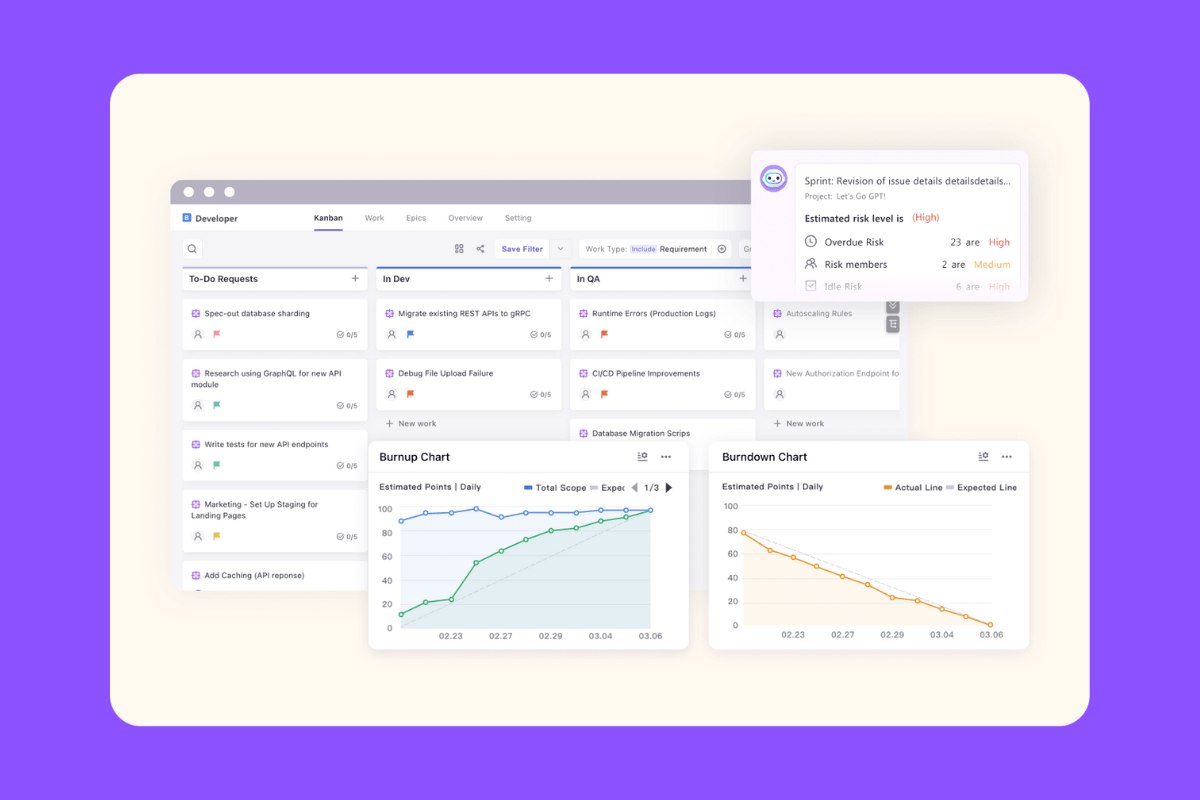
A Single Source of Truth Across Teams
Leiga brings roadmaps, goals, and execution into a shared, real-time view. Product, engineering, marketing, and leadership all see the same priorities—updated as things change. This reduces interpretation gaps and prevents teams from working off outdated assumptions.
Clear Connections Between Goals, Initiatives, and Work
In Leiga, high-level objectives aren’t disconnected from daily tasks. Teams can see how their work ties directly to initiatives and outcomes. That visibility keeps strategy from fading once execution ramps up.
Real-Time Alignment Without Extra Meetings
Instead of relying on status meetings to stay aligned, teams can check progress, blockers, and changes directly in Leiga. This supports asynchronous alignment, which is especially important for distributed or fast-moving teams.

Built-In Context That Doesn’t Get Lost
Decisions, discussions, and updates stay attached to the work itself. That means new team members, stakeholders, and leaders can quickly understand why things are the way they are. Context stays intact even as priorities evolve.
Early Signals When Alignment Starts to Drift
Because work, dependencies, and priorities are visible in real time, misalignment shows up early before it turns into missed deadlines or last-minute surprises. Teams can course-correct together instead of reacting too late.
Sustaining Cross-Functional Alignment
Cross-functional alignment doesn’t fail because teams don’t care. It fails because most organizations rely on static plans and fragmented tools in a dynamic environment. The breakdown usually starts early in the year—quietly, subtly, and without obvious warning signs.
The fix isn’t more meetings or a heavier process. It’s shared visibility, continuous context, and alignment that evolve as reality changes.
With the right systems in place, teams don’t just stay aligned longer. They move faster, make better decisions, and avoid the costly drift that derails so many plans before Q1 even ends. If alignment matters to your execution, it can’t be an afterthought. It has to be built into how your teams plan, work, and adapt every single day.
Want to stop alignment from breaking down after Q1? See how Leiga keeps teams aligned in real time without extra meetings or manual tracking. Sign up for free.
- Streamline Your Workflow with Leiga
- Effortlessly automate tasks
- Boost productivity with AI insights
- Free forever — elevate project management
