
Every year starts the same way. Your team has big goals, ambitious plans, and a roadmap that looks solid until real work begins.
By February, priorities shift, and by mid-year, projects go off-track. When Q4 arrives, your team is rushing to close initiatives that were locked in twelve months earlier but no longer reflect reality.
Planning for 2026 requires a different approach. Teams are now moving faster, tools are more connected, and expectations are higher. But time and focus are still limited. A project roadmap can’t just outline what you hope to do. It has to help your team decide what to focus on, what to delay, and how to adapt when conditions change.
This guide breaks down how to build a roadmap for 2026 that’s practical, flexible, and grounded in execution, so your team can achieve more.
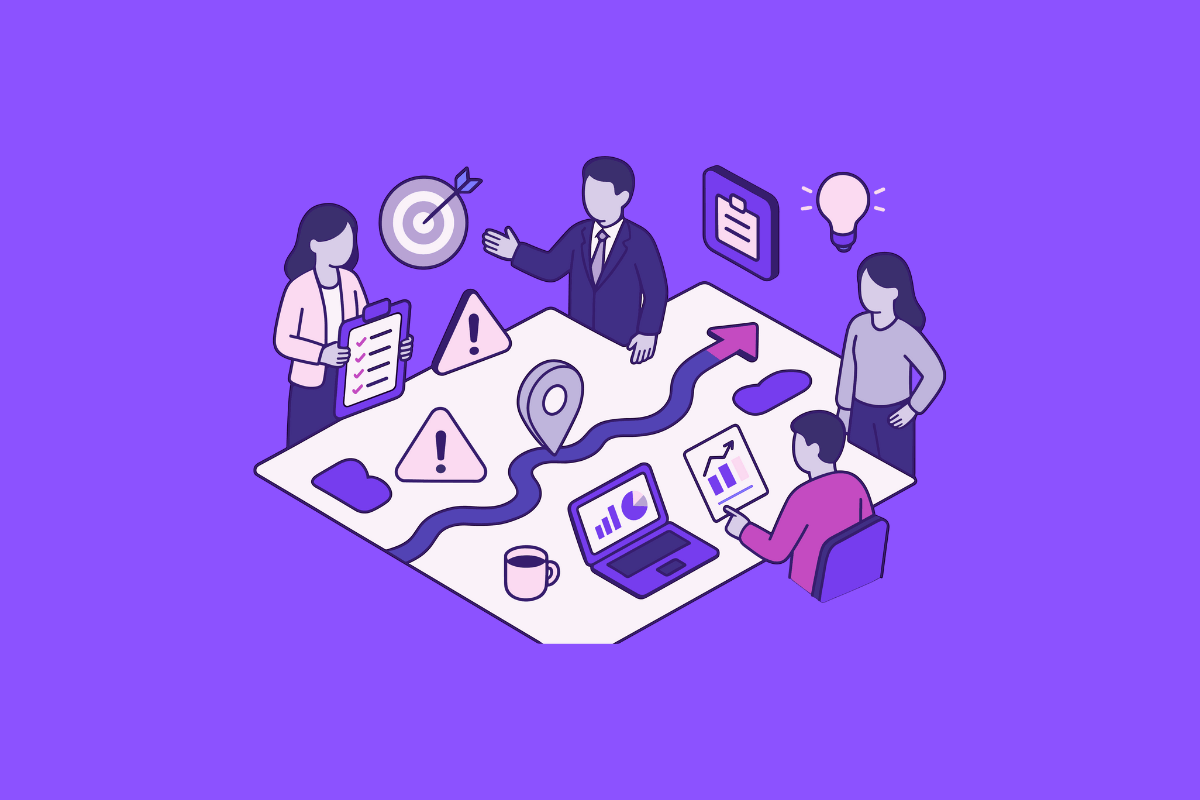
Why Roadmapping Matters More in 2026
Most roadmaps fail for the following predictable reasons:
- They’re created too soon, making too much guesswork.
- They’re too detailed, too rigid, or too vague.
- They don’t link strategy and daily execution.
- They aren’t revisited once the year starts.
In 2026, these issues become magnified. Teams are expected to:
- Deliver continuously, not in big annual launches.
- Respond to changing demands from customers more quickly.
- Work together across tools and teams regardless of time zone.
- Balance long-term bets with short-term wins.
A modern roadmap isn’t a way to set plans in stone. It’s more about establishing alignment, clarity, and decision-making guardrails so that when change happens, teams know how to adjust without chaos.
Read More: How a Clear Project Roadmap Improves Alignment, Speed, and Results

Step 1: Start With Direction, Not Deliverables
Before listing projects, features, or milestones, make sure you get clear and understand your team’s direction. It's important to outline what your team needs to prioritize this year. This should not be limited to success. Make sure to include improvements in your processes or blockers you want to solve.
Ask the tough questions first:
- What outcomes actually matter this year?
- What problems need solving now, and which ones do not?
- What does success look like by the end of 2026?
Strong roadmaps are tied to results, not tasks.
Define Clear Strategic Themes
Strategic themes act as the backbone of your roadmap. These can include:
- Improving customer retention
- Reducing operational overhead
- Accelerating product delivery
- Expanding into new markets
- Strengthening internal processes
Limit this to 3–5 themes. If everything is a priority, nothing is. Each initiative on your roadmap should clearly tie back to one of these themes. If it doesn’t, you can consider removing them.
Step 2: Audit Last Year Before Planning the Next One
Before planning 2026, take an honest look at 2025. Analyze which processes and plans served your team and which ones created issues later on. Most teams skip this step and pay for it later when they repeat mistakes or retain processes that slow them down.
Review:
- What initiatives were completed vs. abandoned?
- Where did timelines consistently slip?
- Which projects delivered measurable impact?
- Where did teams burn out or experience bottlenecks?
This isn’t about blame. It’s about pattern recognition.
If you consistently overestimated capacity last year, assume the same risk exists this year. If cross-team dependencies slowed delivery, design your roadmap to reduce them. If priorities changed every quarter, plan for flexibility instead of pretending stability exists.
Your roadmap should reflect reality, not optimism.
Step 3: Decide What Not to Do in 2026
One of the most valuable outcomes of roadmapping is clarity on what won’t happen. Every “yes” costs time, focus, and energy. It's easy to list goals and projects your team wants to achieve next year. But when you build annual project plans, it's important to set boundaries and paint a clear picture of what your priorities should be.
When preparing your roadmap:
- Cut initiatives that don’t tie to your goals
- Deprioritize “nice-to-have” projects with unclear impact
- Limit major initiatives per quarter
A lean roadmap increases the odds that what is planned actually gets done. A good rule of thumb: if your roadmap feels slightly uncomfortable because it excludes ideas people like, you’re probably doing it right.
Step 4: Choose the Right Roadmap Level
Not all roadmaps should look the same. Some teams thrive on flexible roadmaps, while others execute better with project plans that outline tasks and goals step-by-step. It's also true that often, the biggest mistake teams make is over-detailing too early. Priorities tend to shift, and with AI at the core of workflows, processes will improve. There are a lot of factors that can speed up or slow down execution. It's important to keep these in mind.
For project planning, your roadmap should focus on:
- Major initiatives
- Key milestones
- Outcome targets
- Dependencies and constraints
Avoid adding these to your roadmap:
- Task-level breakdowns
- Day-by-day schedules
- Overly precise deadline
Think of your 2026 roadmap as a navigation system, not a step-by-step list. It should show direction and priorities, not lock every move in place.
Step 5: Break the Year Into Planning Horizons
One effective approach for 2026 planning is horizon-based roadmapping. This helps teams balance future needs and growth while also giving space for any innovation. With a horizon roadmap, you can map short-term and long-term goals for every period, making alignment smoother and priorities clearer.
Horizon 1: Near-Term (Next 1–3 Months)
- High confidence
- Clear scope
- Actively being executed
Horizon 2: Mid-Term (3–6 Months)
- Medium confidence
- Defined goals, flexible scope
- Dependent on learning from Horizon 1
Horizon 3: Long-Term (6–12 Months)
- Low confidence
- Outcome-focused
- Subject to change
This structure acknowledges uncertainty while still giving stakeholders visibility into what’s coming next. It also makes roadmap updates easier. You adjust later horizons without changing plans and goals for the next term.
Step 6: Make Capacity Visible
A roadmap that ignores capacity is just a wish list. Project managers and team leaders should be mindful of available resources and their team's capacity. This matters when balancing workloads to prevent burnout and ensure timely delivery.
Teams are also juggling async collaboration, which you should consider. Make sure to include time needed for collaboration or reviews.
For 2026, teams need to be realistic about:
- Team size and skill mix
- Competing responsibilities
- Maintenance and operational work
- Context switching costs
When building your roadmap:
- Reserve capacity for unplanned work
- Factor in time for collaboration and reviews
- Avoid stacking too many initiatives in the same quarter
If everything is scheduled for Q1, nothing will finish in Q1. A good roadmap balances ambition with sustainability.
Read More: Team Workload Management: How to Balance Capacity and Prevent Burnout

Step 7: Identify Dependencies Early
Dependencies are where roadmaps get lost. It's common for some teams to neglect to include dependencies in the roadmap. However, the process of handing off tasks alone takes time and effort.
Common dependency risks include:
- Cross-team handoffs
- Shared systems or tools
- External vendors or approvals
- Leadership sign-offs
Map these explicitly in your roadmap. For each major initiative, ask:
- Who else is involved?
- What needs to happen first?
- What happens if this is delayed?
Flagging dependencies early allows you to:
- Map tasks and work in order of execution
- Reduce unnecessary confusion and mixing of tasks
- Set realistic expectations with stakeholders
An effective task management software can help your team execute faster, even with complex dependencies.
Step 8: Communicate the Roadmap Clearly
A roadmap that isn’t understood might as well not exist. Each individual within an organization should be able to understand and interpret the roadmap. Too many details or technicalities can cause confusion. At the same time, vague project plans just lead to chaos.
Different audiences need different views:
- Executives care about outcomes, risks, and progress
- Teams care about priorities, timing, and ownership
- Stakeholders care about visibility and alignment
For 2026, prioritize clarity over complexity. Consider using the following:
- Plain language instead of internal jargon
- Visual timelines instead of dense text
- Clear ownership for each initiative
And most importantly, explain the “why,” not just the “what.”
Step 9: Treat the Roadmap as a Living System
The biggest mindset shift for 2026 is this: roadmaps are not set-and-forget. It's not a project plan you go over once with your team. A roadmap is a living system that grows along with your milestones, learnings, and priorities. It's important to keep roadmaps updated because they serve as your guide to achieving outcomes you planned for the year.
Build in regular review points:
- Monthly check-ins on progress and risks
- Quarterly adjustments based on learnings
- Clear criteria for when priorities can change
A healthy roadmap evolves without losing direction. If everything changes constantly, the roadmap loses credibility. If nothing changes at all, it loses relevance. Balance is the goal.
Common Roadmap Pitfalls to Avoid
Creating roadmaps can be confusing with too many details to include. There are capacities, workloads, dependencies, timelines, and goals to consider. Some make the mistake of putting all the nitty-gritty details that just create noise instead of bringing clarity. Then there are teams that get lost mid-year because of vague roadmaps.
As you prepare for 2026, watch out for these traps:
- Overconfidence: Assuming best-case scenarios across the board
- Overloading: Too many initiatives, too little focus
- Fragmented Tech Stack: Managing roadmaps across disconnected tools
- Lack of Ownership: No clear accountable owners
- No Feedback Loop: Roadmaps that don’t reflect reality
Avoiding these doesn’t require perfection, just discipline.
Read More: Smarter Project Reports with AI: Turning Every Update into Actionable Insight
How Leiga Helps Teams Create and Execute an Effective Project Roadmap
Creating a roadmap is one thing. Keeping it aligned with real work is another. The right AI project management software helps your team build and execute project plans effectively.
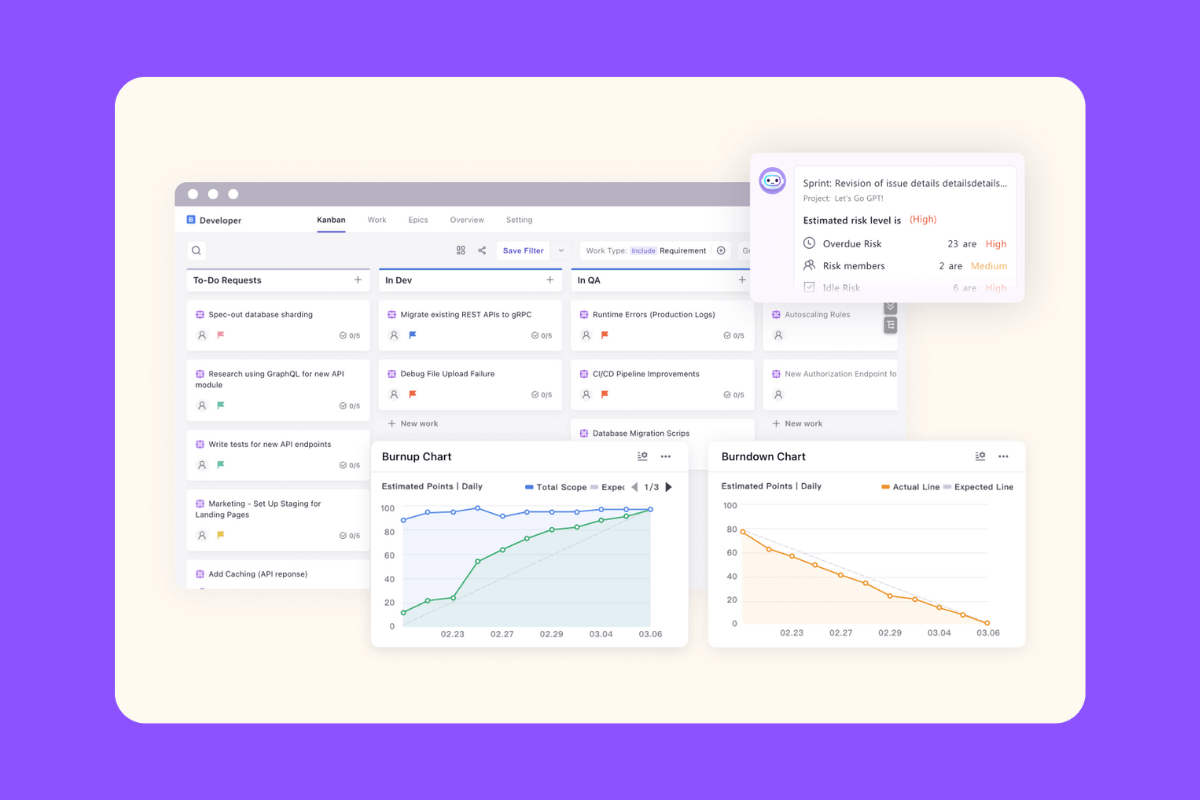
This is where Leiga helps. Leiga acts as a connected workspace where roadmaps aren’t isolated planning artifacts. They’re tied directly to execution.
With Leiga, teams can:
- Build outcome-driven roadmaps that link strategy to actual projects
- Visualize initiatives, timelines, and dependencies in one place
- Adjust priorities without losing historical context
- Keep stakeholders aligned with real-time updates instead of static decks
- Reduce context switching by connecting tools, planning, tracking, and collaboration
Instead of maintaining separate documents for planning and execution, Leiga keeps everything connected. Your roadmap evolves alongside your work, not apart from it. For teams planning 2026, that means fewer surprises, clearer priorities, and a roadmap that actually guides decisions throughout the year.
Preparing for the Year Ahead
Preparing your project roadmap for 2026 isn’t about predicting the future perfectly. It’s about creating a shared understanding of what matters, how you’ll get there, and how you’ll adapt when things change.
The strongest roadmaps are:
- Outcome-focused
- Realistic about capacity
- Flexible by design
- Actively maintained
Get those right, and your roadmap becomes more than a plan. It becomes a tool your team relies on all year long.
When teams understand priorities, constraints, and outcomes, they can make better decisions without waiting for constant direction. Build a roadmap that reflects how work really happens, revisit it often, and treat it as a tool for guidance, not control.
A strong roadmap doesn’t guarantee a smooth year. But a weak one almost guarantees friction. As you plan for 2026, focus less on perfect forecasts and more on clarity, alignment, and adaptability. Leiga helps you create an effective roadmap that focuses on these. Create the roadmap that will guide your team to success. Try Leiga today.
- Streamline Your Workflow with Leiga
- Effortlessly automate tasks
- Boost productivity with AI insights
- Free forever — elevate project management
